A straightforward social format with one clear message, a lightweight shoot and a concise edit.
Practical guide / Corporate video
Corporate video production guide
Budgets, formats, locations, timelines, usage rights, drone filming and preparation: a practical guide to help your organisation define its video project before requesting a quote.
Contents
A guide to make decisions without adding three more meetings.
01How much does a corporate video cost?Go to section
02Which formats should you plan for?Go to section
03Where can you film across Switzerland and France?Go to section
04What timeline should you allow?Go to section
05Which usage rights need to be defined?Go to section
06What information should you provide before filming?Go to section
Pricing & budget
The right budget depends mainly on the level of preparation.
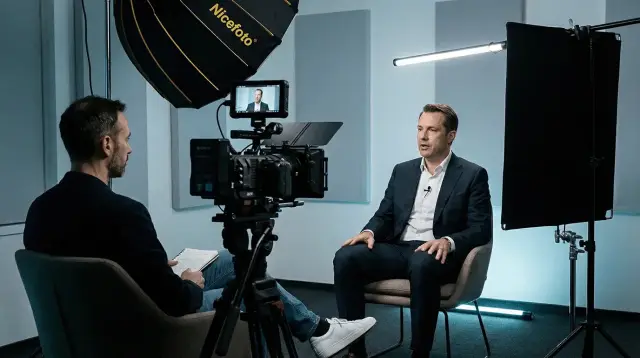
A corporate video can range from a straightforward interview to a more ambitious film involving location scouting, scripting and drone footage, several locations, subtitles and social media edits. The price therefore depends less on the final running time than on the number of production days and the complexity of post-production.
The best starting point is to define how the film will be used before discussing equipment: website, LinkedIn, trade show, recruitment, advertising campaign, internal communications or a sales presentation.
A simple rule: the clearer the message before filming, the less the edit has to repair. A good brief often saves money.
Half a day of filming, half a day of editing, one speaker, simple graphics and a web export.
Interview, supporting footage, paced editing, music, titles, a web version and simple cutdowns.
Several locations, drone footage, subtitles, short edits, editorial preparation and multi-channel delivery.
Formats & deliverables
One shoot can produce more than one film.
One shoot can provide a main film and short formats suited to commercial and social use. For Chanel x Elle, I delivered the main 2 min 45 film; Playmaker produced the short versions. For Avène x Elle, I edited both the main film and the short vertical version.
Main 16:9 film
For your website, YouTube, a sales presentation, a trade show or a service page.
LinkedIn cutdowns
Short subtitled extracts to announce a project or share your expertise over time.
Standalone interviews
Comments from a director, employee, client or partner, edited as reusable modules.
Stills and thumbnails
Still images for web pages, YouTube thumbnails, posts, newsletters or press packs.
Locations & local constraints
Filming locally means planning access, sound, weather and permissions.
A good setting for employer-branding, sport, tourism and seminar films, with both lake and mountain locations. Parking, visitor numbers and drone permissions need to be planned.
A strong setting for local companies, sailing, tourism, property and executive portraits. The lake is a visual asset, but the weather can change quickly.
Geneva works well for corporate, institutional, NGO, healthcare, finance and international content. Access, confidentiality and tight schedules need to be considered.
A good area for industry, innovation, tourism, outdoor projects and technical sites. A location scout helps avoid losing time on the filming day.
Planning & timelines
A corporate film is often won before the camera starts rolling.
Brief & objective
We clarify the audience, core message, intended uses, constraints and required deliverables.
Preparation
Prepare the questions, scout the locations, set the schedule, brief the teams and check sound and light.
Filming
Interviews, supporting footage, drone shots when useful and permitted, and images of the work or location.
Editing
First cut, feedback, revisions, colour grading, sound mix, subtitles and final exports.
Usage rights
Usage rights should be clear before delivery.
A corporate film can do several jobs. It may be used on a website, LinkedIn or YouTube, in an advertising campaign, at a trade show, in a sales presentation or for internal communications.
The quote should therefore define the intended uses, usage period, delivered formats, music, any voice-over, subtitles and the rights relating to people shown on screen.
Define these points from the start
- Who approves the edit?
- How many feedback rounds are included?
- Will the raw footage be supplied?
- Will the video be used in paid advertising?
- Are vertical versions required?
Clarifying these points avoids unnecessary revisions at the end of the project.
Client checklist
What to prepare before requesting a quote.
Frequently asked questions
Budget & formats
5 questionsWhat budget should you allow for a corporate video?
A short social format can start at a few hundred euros. A more complete corporate film involving preparation, interviews, supporting footage, subtitles and cutdowns usually requires a larger budget. The most reliable approach is to define the intended use, number of locations and deliverables first.
How should you compare two video quotes?
Price alone is not enough. Compare filming days, editing time, included feedback rounds, subtitles, vertical formats, music, usage rights and final deliverables. Two quotes may look similar while covering very different amounts of work.
How can you tell whether a corporate video is worth the investment?
A video is easier to justify when it supports several uses: your website, sales, LinkedIn, recruitment, trade shows, presentations or internal communications. Before discussing equipment, make sure the film has a specific job and can be reused over time.
How long should an effective corporate video be?
For a website, 1 to 3 minutes is often enough. A longer YouTube version can work when the subject justifies it. For LinkedIn or Instagram, plan extracts of 15 to 60 seconds.
Can one shoot produce several formats?
Yes. One shoot can produce a main film, LinkedIn cutdowns, vertical versions, subtitled extracts, thumbnails and sometimes stills. This is often more efficient than planning several separate shoots.
Filming & locations
4 questionsDo you work in Annecy, Thonon, Geneva, Lausanne and Chambéry?
Yes. A project can be organised across Haute-Savoie, Savoie or French-speaking Switzerland. Travel, access, permissions and border logistics simply need to be planned in advance.
What should you look for in a corporate videographer?
A reliable videographer shows consistent work, takes sound seriously, asks questions before quoting, defines deliverables and rights, and anticipates location, schedule and distribution constraints. Good preparation matters as much as image quality.
Can you film while a company is operating?
Yes, but work areas, staff, disruption and sound need to be planned. A lightweight setup often makes it possible to remain discreet.
What happens if the weather prevents outdoor or drone shots?
A backup plan is best: indoor scenes, another time slot, alternative supporting footage or a partial reschedule. Weather can change quickly near lakes and mountains, so scouting helps avoid surprises.
Timelines & delivery
2 questionsDo you need a complete script?
Not always. A list of questions is often enough for an interview. For a highly commercial or technical video, a script or structured outline helps prevent omissions and keeps the message accurate.
How long does it take to receive the first cut?
For a straightforward video, the first cut can often be ready one to two weeks after filming. A more complete project involving several formats, interviews or internal approvals usually requires three to four weeks.
Rights & distribution
2 questionsShould you include subtitles for LinkedIn and Instagram?
Yes, in most cases. Many people watch without sound, especially on mobile. Subtitles improve understanding, accessibility and the reuse of extracts on social media.
Is drone footage essential?
No. Drone footage is useful when it communicates something: location, setting, access, architecture or the scale of an event. It should not be added purely for decoration.
From the guide to your project
Ready to define your corporate video project?
Send me your objective, location, speakers and required formats. I will tell you what is realistic, what is useful and what can wait.